
Sandip Gadekar boasts 5+ years of experience in Amazon Web Services, specializing in Cloud Computing, Solutions Architecture, and DevOps. With strong expertise in modern AWS services like serverless computing (Lambda), containerization (EKS), Infrastructure as Code (CloudFormation), and AI/ML services (SageMaker, Bedrock), they excel at designing scalable, secure, and cost-optimized cloud architectures. Their focus includes cloud automation, performance optimization, and real-world AWS project implementation. Passionate about teaching, they deliver hands-on training to build industry-ready cloud skills.
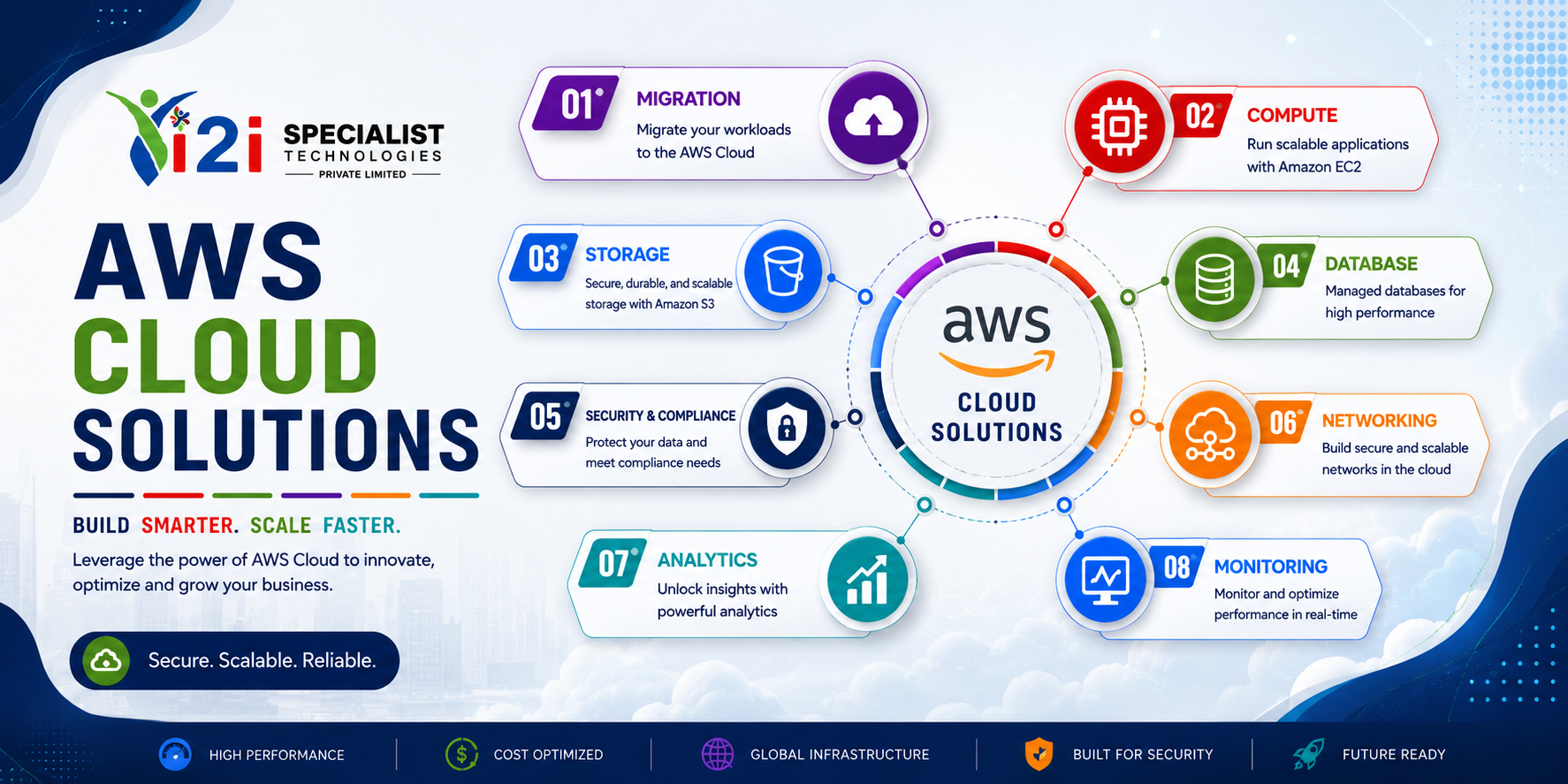
Amazon Web Services (AWS) is a leading cloud computing platform that provides secure, scalable, and cost-effective cloud infrastructure such as computing power, storage, databases, networking, and AI-powered services. It enables businesses to build, deploy, and manage applications without maintaining physical servers.
An AWS course covers essential services like EC2, S3, IAM, VPC, RDS, Lambda, CloudWatch, and Route 53, along with modern cloud practices such as DevOps automation and Infrastructure as Code (IaC). Students learn how to design, deploy, and manage highly available and fault-tolerant cloud systems.
This course focuses on hands-on training with real-world AWS projects, helping learners gain practical skills in cloud architecture, security, and cloud optimization. It prepares students for high-demand roles such as Cloud Engineer, Solutions Architect, and DevOps Engineer in today's cloud-driven IT industry.
Explore real-world industry projects designed to provide hands-on experience and practical skills through our job-oriented training programs in Pune. Students gain exposure to industry-standard tools, technologies, frameworks, project development methodologies, problem-solving techniques, and real-time business scenarios. Our industry-focused training institute in Pune emphasizes practical learning through live projects, case studies, internship opportunities, and project-based training to help students build a strong portfolio and develop job-ready technical and professional skills required by today's competitive job market.

One-to-one AWS Cloud Computing training provides a highly personalized learning experience designed to match your career goals, technical background, and learning pace. This training helps you build strong foundations in cloud computing and prepares you for industry-ready AWS job roles with practical knowledge and guided mentorship.
The program covers essential AWS services such as EC2, S3, RDS, IAM, and VPC along with advanced concepts like cloud networking, security, automation, and Infrastructure as Code using CloudFormation. You will also gain hands-on experience through real-world AWS labs, live projects, and practical assignments designed to simulate industry environments.
Along with technical skills, this training focuses on AWS certification preparation, resume building, interview readiness, and career guidance. With continuous mentorship from experienced professionals, learners are prepared for high-demand roles such as Cloud Engineer, DevOps Engineer, and AWS Solutions Architect in top IT companies.

We are proud to showcase our students who have successfully transitioned into
professional careers
in leading IT companies across India. Each placement represents strong dedication,
consistent practice,
and hands-on experience gained through industry-oriented training, real-time
projects,
and interview preparation.
Our training programs are designed to build practical skills in technologies such as
Java, Python, Angular,
Software Testing, Data Analytics, and Full Stack Development. With continuous
mentorship
and career support,
students are well-prepared to meet industry expectations and secure high-quality job
opportunities.

Company: Accenture
Position: Java Developer
Successfully placed as a Java Developer at Accenture after completing intensive training in Core Java, Advanced Java, Spring Boot, and real-time project development. He demonstrated strong problem-solving skills and hands-on coding expertise during the interview process.

Company: Tietoevry India Pvt. Ltd.
Position: Software Developer
Successfully started her professional journey as a Software Developer at Tietoevry India Pvt. Ltd. She gained strong knowledge in software development lifecycle, backend programming, and real-world project implementation during her training period.

Company: Innovance
Position: Angular Developer
Placed as an Angular Developer at Innovance after gaining strong expertise in frontend development. He worked on Angular frameworks, API integration, and UI optimization through real-time project experience during the training program.

Company: JVM Technologies
Position: Software Developer
Successfully placed as Software Developer at JVM Technologies after building strong programming fundamentals and completing multiple real-time development projects. He also performed well in technical interviews and coding assessments.

Company: Cybage
Position: Software Tester
Successfully joined Cybage as a Software Testing professional. He gained expertise in manual testing, automation basics, test case design, and bug tracking tools, which helped him secure placement in a reputed IT company.

Company: Vigoursoft Global Solution
Position: Software Developer
Started her career as a Software Developer at Vigoursoft Global Solution. She developed strong skills in programming logic, database handling, and web development through structured training and project-based learning.

Company: Techorbit
Position: Software Developer
Successfully placed after gaining hands-on experience in real-time development projects. She worked on full stack technologies and demonstrated strong understanding of coding standards and project execution.

Company: TCS
Position: Software Developer
Successfully joined Tata Consultancy Services (TCS) as a Software Developer. He developed strong skills in Java programming, data structures, and enterprise application development through rigorous training and practice.

Company: PRM Soft Solution Limited
Position: Software Developer
Placed as Software Developer after mastering core programming concepts and working on multiple real-world applications. His strong analytical thinking and coding ability helped him clear technical interviews successfully.

Company: IPH Technologies
Position: Software Engineer
Started his professional career as a Software Engineer at IPH Technologies. He gained expertise in software development lifecycle, backend systems, and application development through project-based learning.

Company: Aloha Technology
Position: Software Developer
Achieved placement in Aloha Technology after developing strong skills in coding, debugging, and web application development. He actively participated in project development and technical sessions.

Company: Kyndryl Solutions
Position: Software Engineer
Successfully joined Kyndryl Solutions as a Software Engineer. He gained strong technical expertise in enterprise-level applications, problem-solving, and system design concepts.

Company: Prorigo Pvt. Ltd.
Position: Software Developer
Placed through strong technical preparation and real-time project exposure. He developed solid skills in full stack development and performed excellently in interview rounds.

Company: Pandoza Solution
Position: Frontend Developer
Started her career as a Frontend Developer at Pandoza Solution. She gained expertise in HTML, CSS, JavaScript, and modern UI frameworks through practical training and project work.

Company: Velocity Business Solutions
Position: Digital Marketing
Successfully placed as a Java Developer at Accenture after completing intensive training in Core Java, Advanced Java, Spring Boot, and real-time project development.

Company: Technoartz
Position: Digital Marketing
Successfully started her professional journey as a Software Developer at Tietoevry India Pvt. Ltd. She gained strong knowledge in software development lifecycle, backend programming, and real-world project implementation during her training period.